Along the Silk Road - Hotan
After three days in Kashgar, I had successfully opened my Silk Road journey with a confident heart.
I chose to arrive in Hotan by train.
The five-hour train ride had its purpose other than just being a cheaper option. It brought me back the experience of traveling as a student years ago.
/
It was my first time in Hotan.
I was born in Urumqi and the cities in the south have always been mythical to me. I had only ever heard stories about them, about the traditions and sometimes the stereotypes that had replaced the real stories.
I was excited that this time, I was going to discover everything for myself.
/
After settling in the hotel, I got changed and headed to the evening bazaar in the city centre.
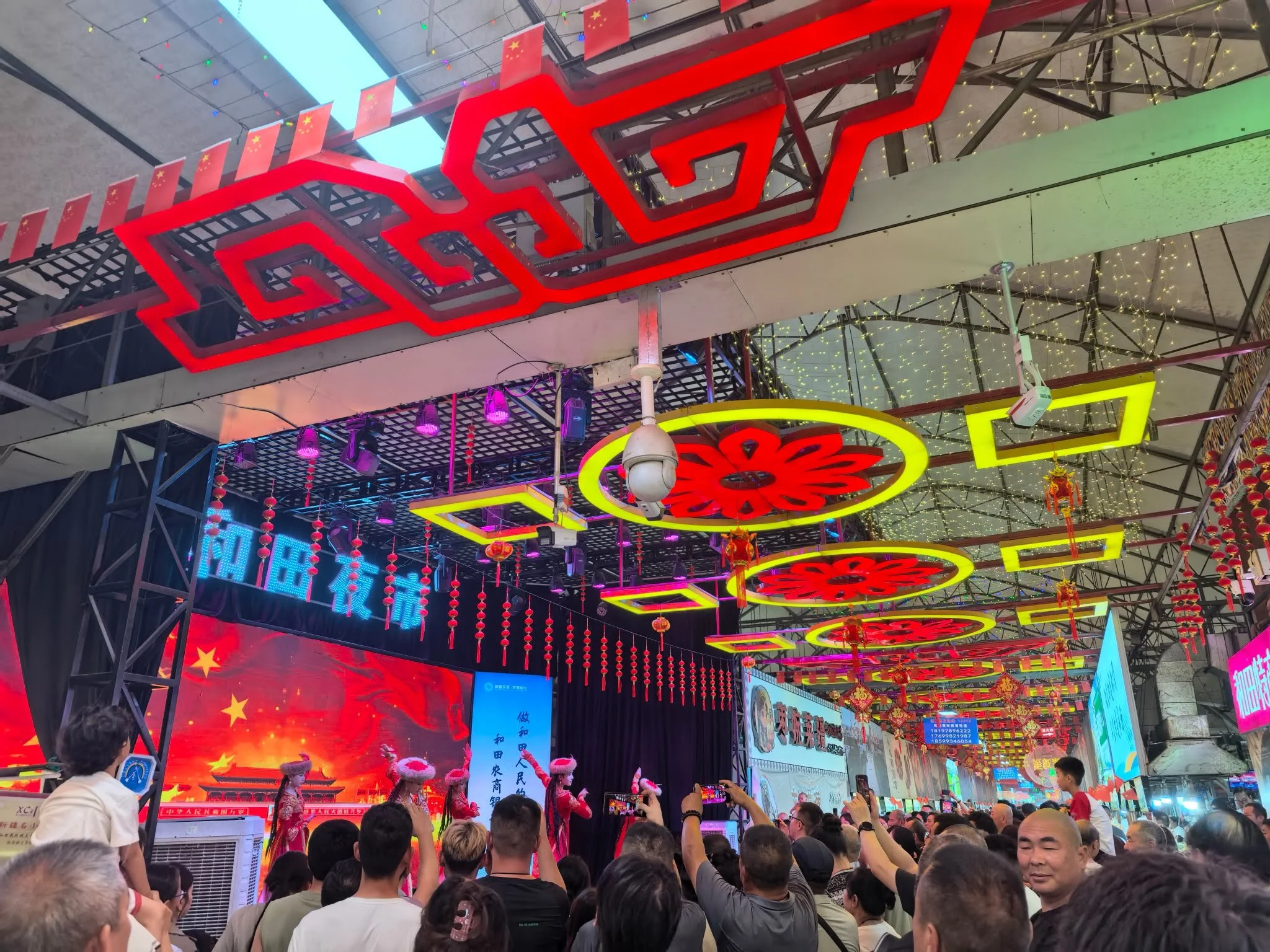
This evening bazaar was famous for its various food stands and the on-stage dance shows in the middle of the avenue. It was designed to give visitors the most authentic experience - tasting the local food while appreciating the local culture.
Walking along the avenue, what struck me most was not how familiar the scene was, but how unfamiliar I felt being there - a tourist in my homeland. Though we were all Uyghur, belonging to the same community who inhabits this vast land called Xinjiang, at that moment, I felt like an outsider.
I stopped at a stand selling a type of snack made with eggs. The girl at the stand was surprised to find out that I spoke Uyghur and invited me to sit down. While I was eating, I found myself watching the girl at the stand, and of course I understood everything she was saying, but there was a distance between us - I felt that we were fundamentally different. I was a tourist who had come to spend a holiday, while she had probably never left Hotan.
We live in such different worlds, and each of us is made so differently.
/
It occurred to me then, the reason why I had come on this trip - I came here to dig my roots.
The roots that I had long overlooked, but that had been reaching out to me across the distance over the years.
Carrying this thought, I made my way to a newly created sightseeing centre - Yotkan City - to discover more.
/
Yotkan - I had never heard this name before.
In plain Uyghur language Yotkan means duvet, but being there taught me that this word had carried a more profound meaning in the past.
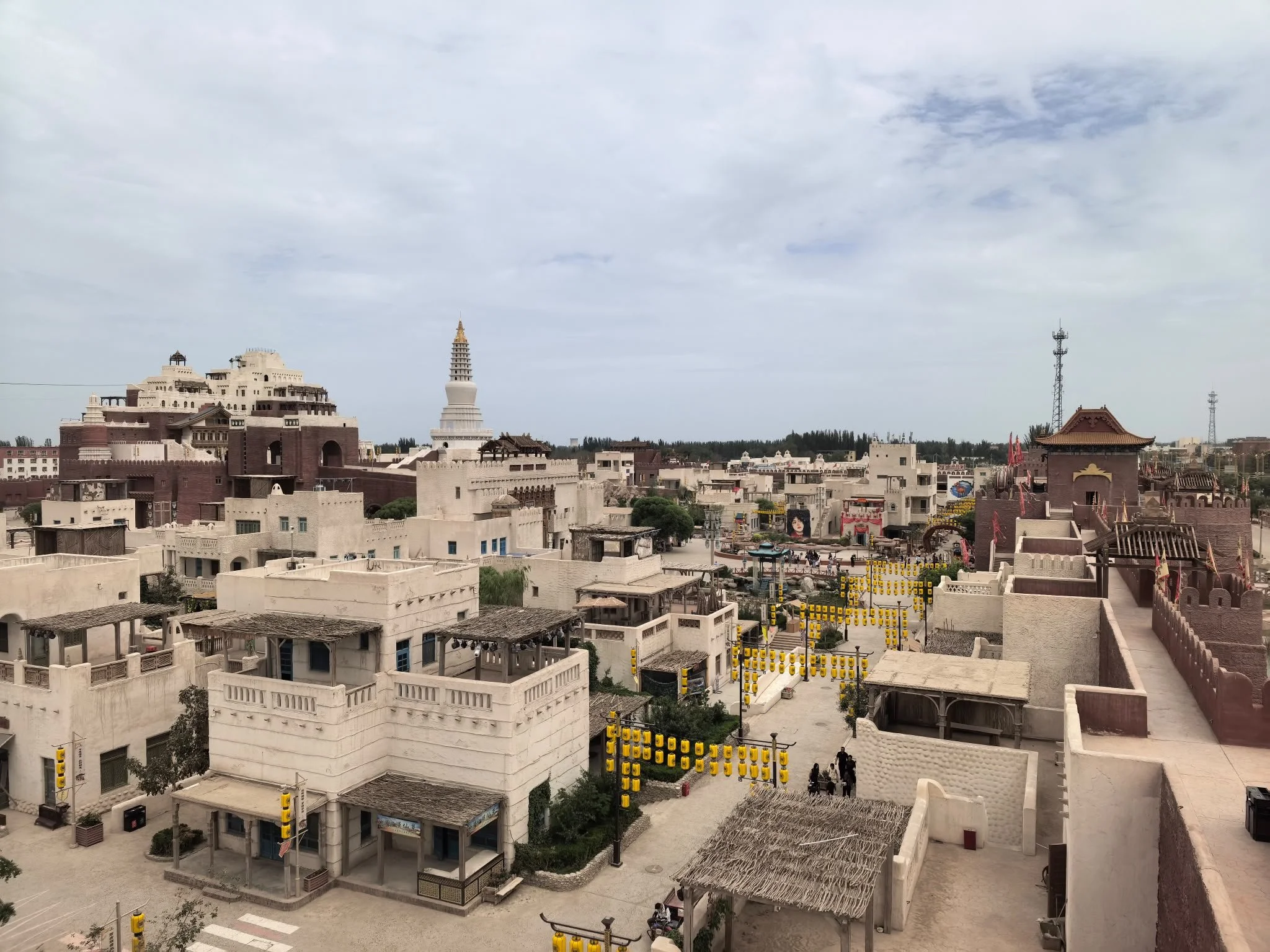
Yotkan was located slightly outside Hotan. It was a very well-designed tourist centre with many sections to display the different stories of the region.
There were buildings and rooms dedicated to showing video images of that ancient era. There were also indoor stages where there were performers reviving dances that had been lost to history.
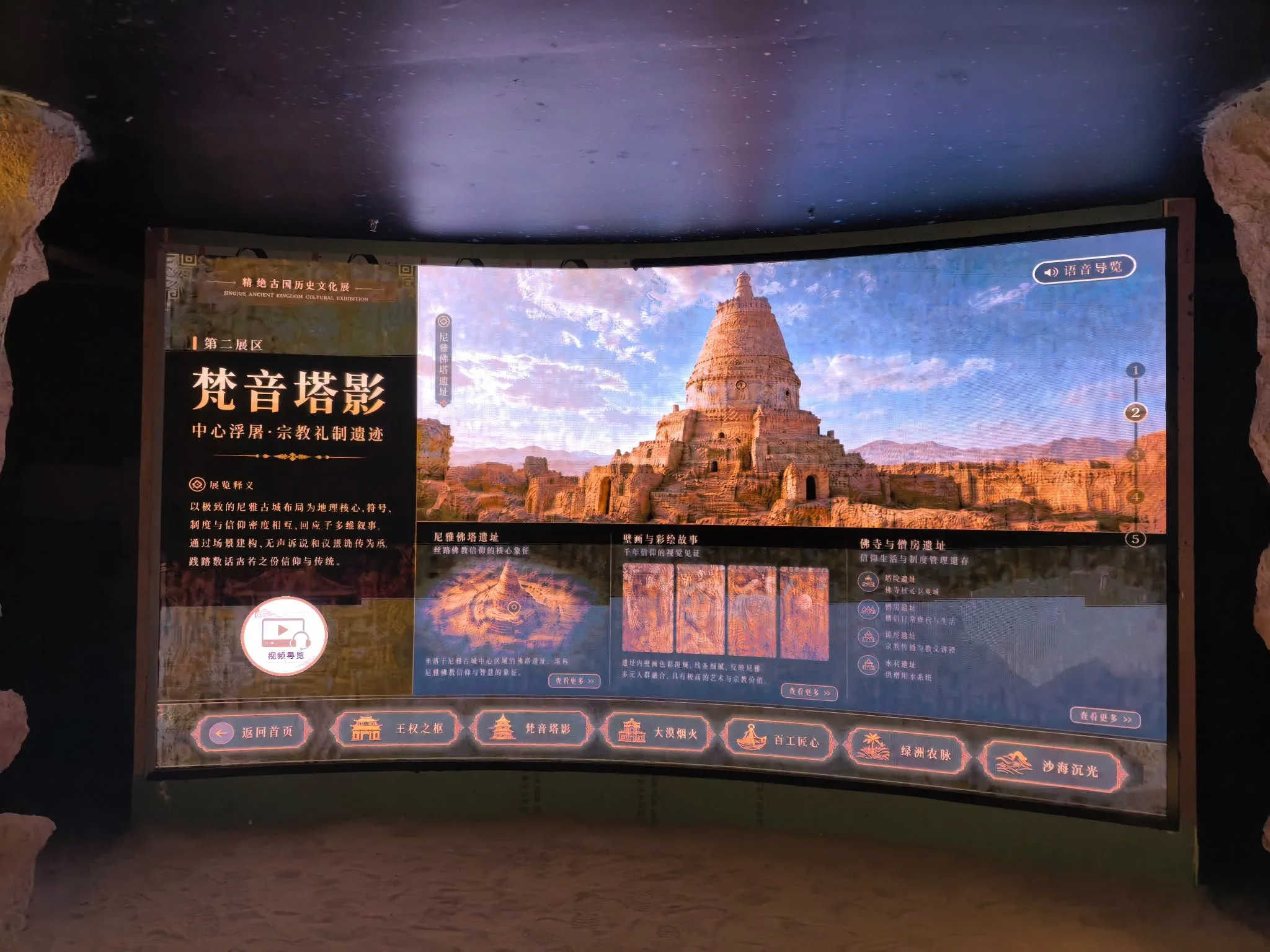
I was most drawn to the colourful panels lining those rooms, which traced a long historical timeline of the region, especially the one called Yutian.
Yutian was a major cultural and trade centre during the Silk Road era, and it remains famous to this day for its jade jewellery, traded across the globe.
I couldn’t help but imagine those merchants pulling their handcarts and discussing their deals with people who came from all over the continent. Different backgrounds, different languages, different religions - all had been colliding here for centuries and eventually left their mark in all kinds of ways in this place called Hotan.
The town had shops around every corner, and I was delighted to find a café nearby and grabbed a drink.
Iced coffee in hand, I reminded myself to catch a breath during this magnificent discovery of the past and take it all in with an open heart.
The town was mainly designed to reflect the history of the silk road and its culture. There were statues of famous figures. There were temples and fountains that decorated the town as if it was in the past. There were also maps and explanations of the ancient Silk Road trade routes connecting mainland China to Xinjiang.
The place was full of wonder, and it was not easy to digest all of it in one go.
Thinking of visiting another spot in the Hotan City, I decided not to stay for the evening show, which I had heard was the town’s main gem.
What a pity! However, a good reason to return one day.
/
I arrived at the next place with more curiosity, having just visited an ancient town.
This was a neighbourhood where real people were living real lives and much of that life had been preserved across centuries.
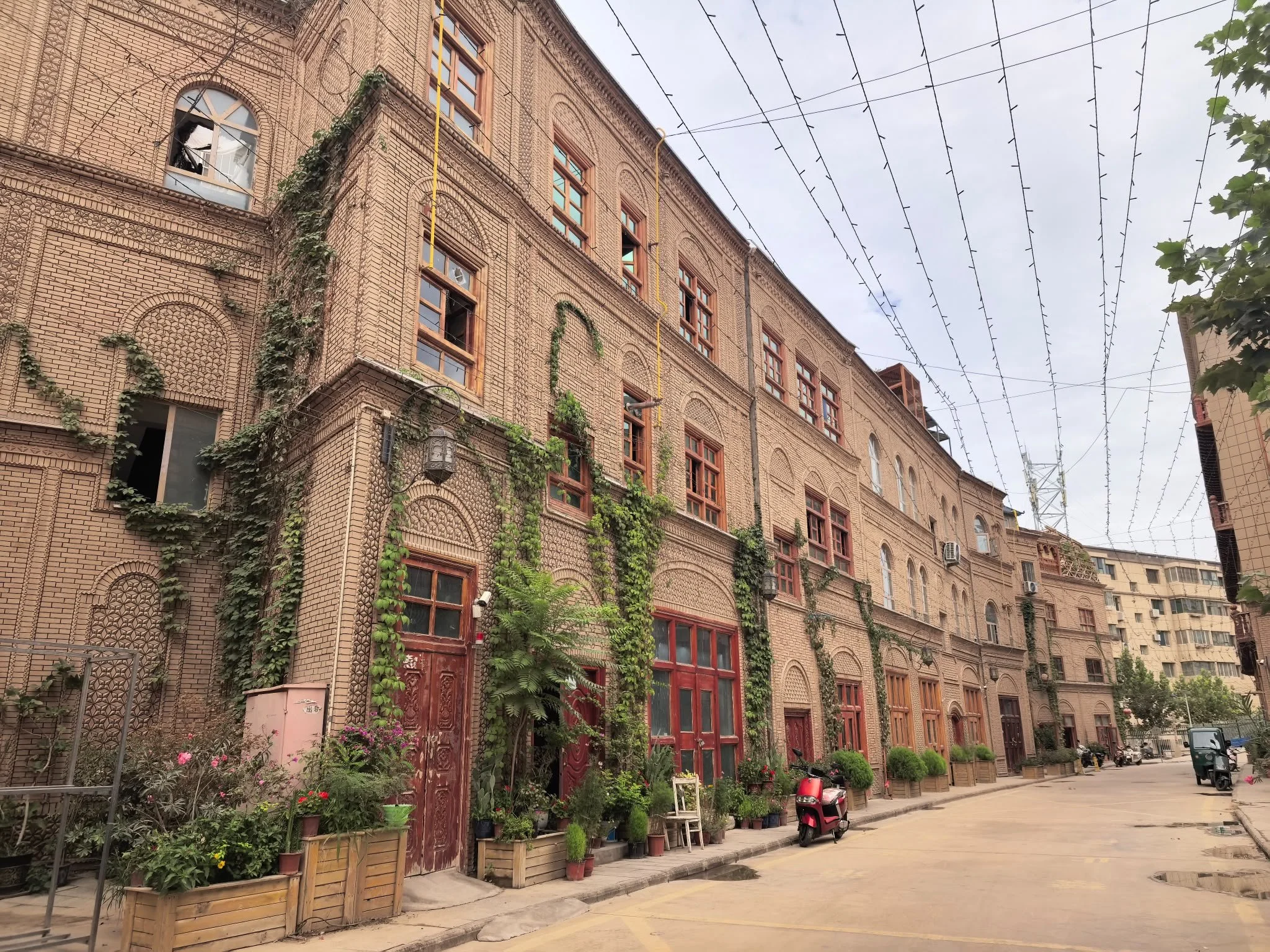
After getting some food into my stomach while booking a rental car for the next day, I started walking again through the winding streets that felt like the ones in Kashgar old town, but with fewer visitors.
The shops were very different from the ones in Kashgar. What surprised me the most here were the flashing gold jewellery pieces displayed in the glass counters and exquisite bolts of fabric propped against the shop windows.
This town looked wealthy.
When I walked deeper into some of the passages, I discovered more independent clothing design shops and some music studios for instrument learners and dancers.
This wasn’t what I was expecting. However, I didn’t know what I was expecting.
To some extent, the name Hotan only existed in its stereotype in my head rather than a real place where people live.
All of these discoveries were teaching me to be more open to everything, to have a wide open heart.
I loved walking on the streets and crossing the roads just as a citizen who lives there. I had a distinct advantage being Uyghur in that region where no one would suspect me of being an outsider quietly observing everything.
I passed shop windows filled with dazzling gems and treasures, but the town was strangely quiet.
There was something missing, a kind of spirit, a kind of joy in knowing that all these histories and treasures belonged to the city.
After walking so much through those streets, I decided to go back to the hotel before my feet gave up on me.
/
The first half of the Hotan trip was over, and it wasn’t possible to put into words how I felt being there and seeing everything.
Some feelings are better left inside, indescribable.
However, the witnessing had already changed something in me.
/
The next day had arrived. I went to pick up the car in the late morning and it was a day I was very excited about.
Once I got into the car, it was a complete shift of energy. I was glad I had made this choice - it saved energy for the rest of the trip. I still had a long list of places to go.
/
For this day, I didn’t plan on staying in the city. I drove toward a nearby town, also steeped in history and stories - Karkash in Uyghur, MoYu in Chinese.
The name in Uyghur means black eyebrows, usually describing someone beautiful with fine brows, and by extension, someone clever.
When I arrived in the town on an empty stomach, the sun was directly above my head.
It was a very hot day.
I went to look for food as soon as I parked the car somewhere safe.
To my surprise and maybe to everyone’s surprise, I appeared in a restaurant having no idea that it was someone’s wedding.
I was asking for a place to get food but someone brought me to the chef who simply handed me two plates, one with pilof and the other with laghman (noodle).
Though I was a bit embarrassed about eating for free, I couldn’t bring myself to care because the food looked wonderful and I was hungry.
The thing is, I didn’t feel guilty. I felt at home in this kind of hospitality, because this is just what we do. It is part of the culture - generosity - where I came from.
I thanked the owner when he refused to accept my payment and I was glad to have attended a wedding on a random day of my travels. A beautiful coincidence!
After visiting the town, I drove away and decided to visit the Taklamakan desert - a deeper venture into the land.
/
The Taklamakan desert was somewhere I had only ever heard about on TV, in songs and journals.
It was a thrill to finally see it for myself.
/
I followed the navigator to a tourist spot that looked like nothing special. I parked the car and walked toward the nearest gate that looked like it was leading somewhere.
Though I had prepared clothes, shoes and water for desert walking, I found myself already heading into the desert without any of them.
I had no idea what this was going to look like, I just kept walking.
The desert looked like it was right in front of me, and I was still walking.
I started to regret not returning to get my things, especially water. I had left a full bottle of cold water in the car and taken less than half a bottle of warm water.
I was feeling thirsty and I started to hear my own breathing.
It was very quiet - there was nothing around me but sand.
I stopped and looked back.
I had walked half the distance between where I started and what I could see as the end of the desert.
/
I found myself standing in a real desert.
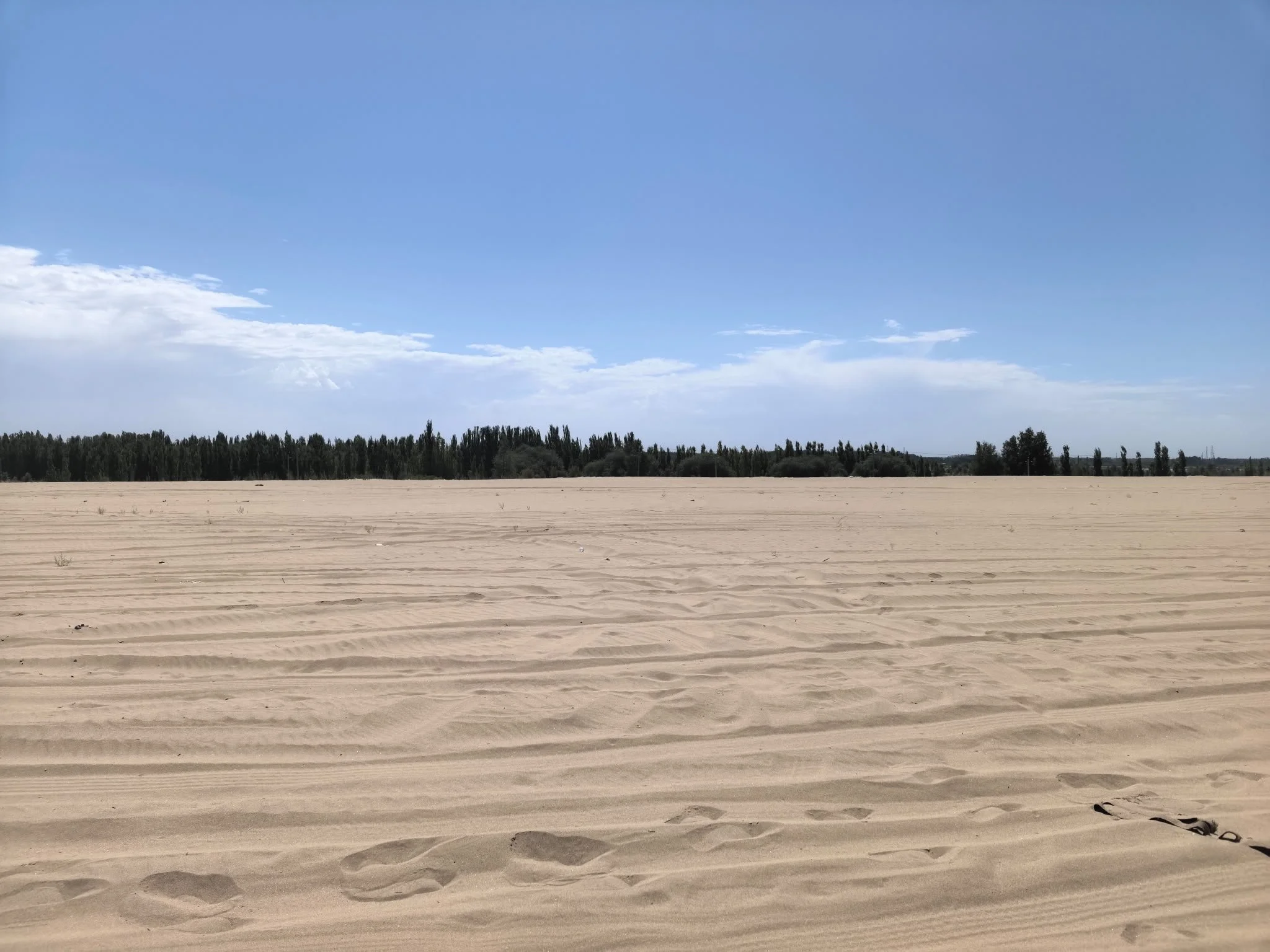
It was profound, to be someone who had been to the Taklamakan desert, a mythical place that had only ever appeared in stories.
It was vast, like a sea. It was golden, reflecting the sunlight. It was blistering, like nothing could live.
/
I kept walking through the scorching heat across the desert aiming to reach the “end”.
The “end” looked real from the distance, although I know consciously that that was probably just a hill and more desert would unfold behind it.
I kept on walking.
I reached a slope leading up to the hill. I hesitated about whether should I keep walking or should I return. It felt like I had got what I came for - to see the desert. I shouldn’t need to walk all the way into it.
Where should it end?
In this moment, two people appeared in front of me, and I was delighted to find out they were a mother and a son having a hiking trip together.
They were resting on a small flat area in the middle of the vast sand slope, looking like they were having a tranquil time.
It gave me a motivation I could not name, so I kept going, up the slope.
/
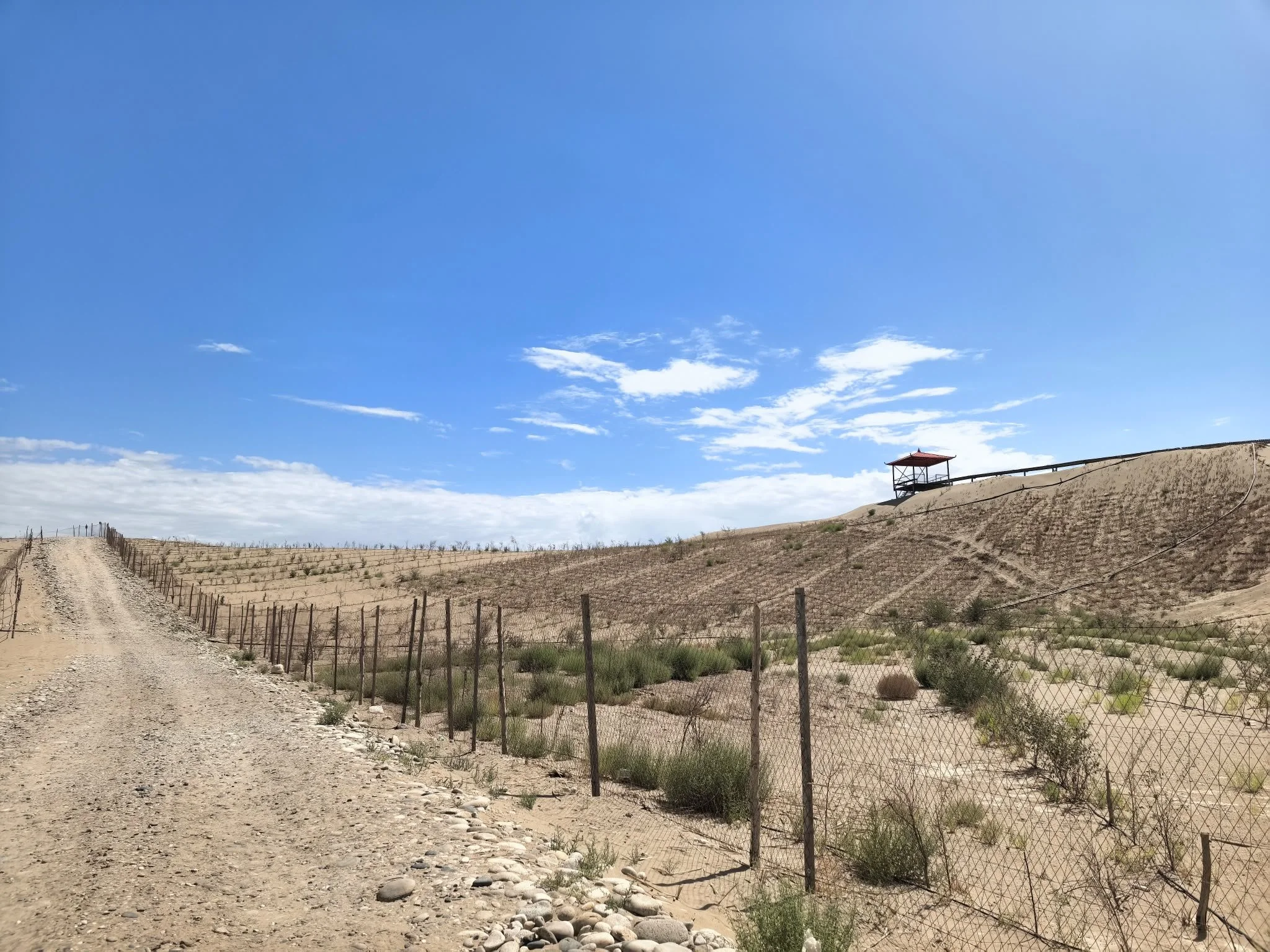
Finally, having drunk all my water, having sung and talked to myself to encourage myself, I reached the top of the hill!
The first celebration was to buy a bottle of water from a vending machine that was placed there. How considerate!
I drank and drank without even trying to appreciate the view before me.
/
At first, I had been drawn by the experience of being in a desert I longed to see with my own eyes. However, now what felt more worthy of celebration was having completed a gruelling desert walk on less than half a bottle of water.
I had already been transformed, by the power of nature.
/
The hill was an ordinary hill, and as I expected, there were more on the other side, more hills.
I couldn’t even see the rest of the desert.
I knew I had only walked a tiny fraction of what hikers usually cover on a desert trip and had seen only a very small part of the Taklamakan desert.
That was all I could do.
/
I went on my return trip.
The re-experiencing of the heat from the sand and the silence didn’t seem unbearable as on the first crossing.
When I was approaching the exit, a group of people walked in. There were a few families who had come for some sunbathing and sand healing (a kind of local wellness activity).
Someone asked me if the sand was well heated.
I was a little surprised at first, but quickly realised that for the sand healing, the sand had to be burning hot to have its full effect on the body.
I answered: “yes, it is well heated!”
/
Finally, I sat in the car with the air conditioning running at full blast.
Though feeling exhausted, I had a huge sense of accomplishment, and that felt like crossing a milestone - proof that I was capable of more than I had imagined.
/
Carrying such great feelings in my heart, I decided to have a relaxing time for the rest of the day.
With my favourite music playing, I took to the main highway connecting three cities and towns.
While having my eyes on the road that was filled with modern cars, in the back of my mind, an ancient voice was whispering of its past and present.
I couldn’t help but imagine the long human history that led us here, to us, to me.
How small yet how significant we are in this long river of humanity. We do and learn what we can to unravel the mysteries of the past, and guide ourselves and others to look forward, in every part of the world.
This is how we pass down the wisdom.
/
This is how the Hotan trip ended.
I returned the car to the rental in the evening and left the parking lot with a heart full of joy.
September, 2026
Paris