Along the Silk Road - Kashgar
2026 has been one of the most transformative years in my life. Not only did I make big decisions in order to leave an old version of life behind, but a trip like this reached every single cell in me.
This is a trip to one of the most ancient parts of the world and an ancient world that used to thrive but has now fallen.
Kashgar, Hotan, Kucha - do they sound familiar or alien?
For me, these names couldn’t be more familiar. They were just names with some stereotypes attached. Now, after years of drifting around the world, I came back to these names and started to taste their flavour. A flavour of a distant past - a world that once existed with pride.
/
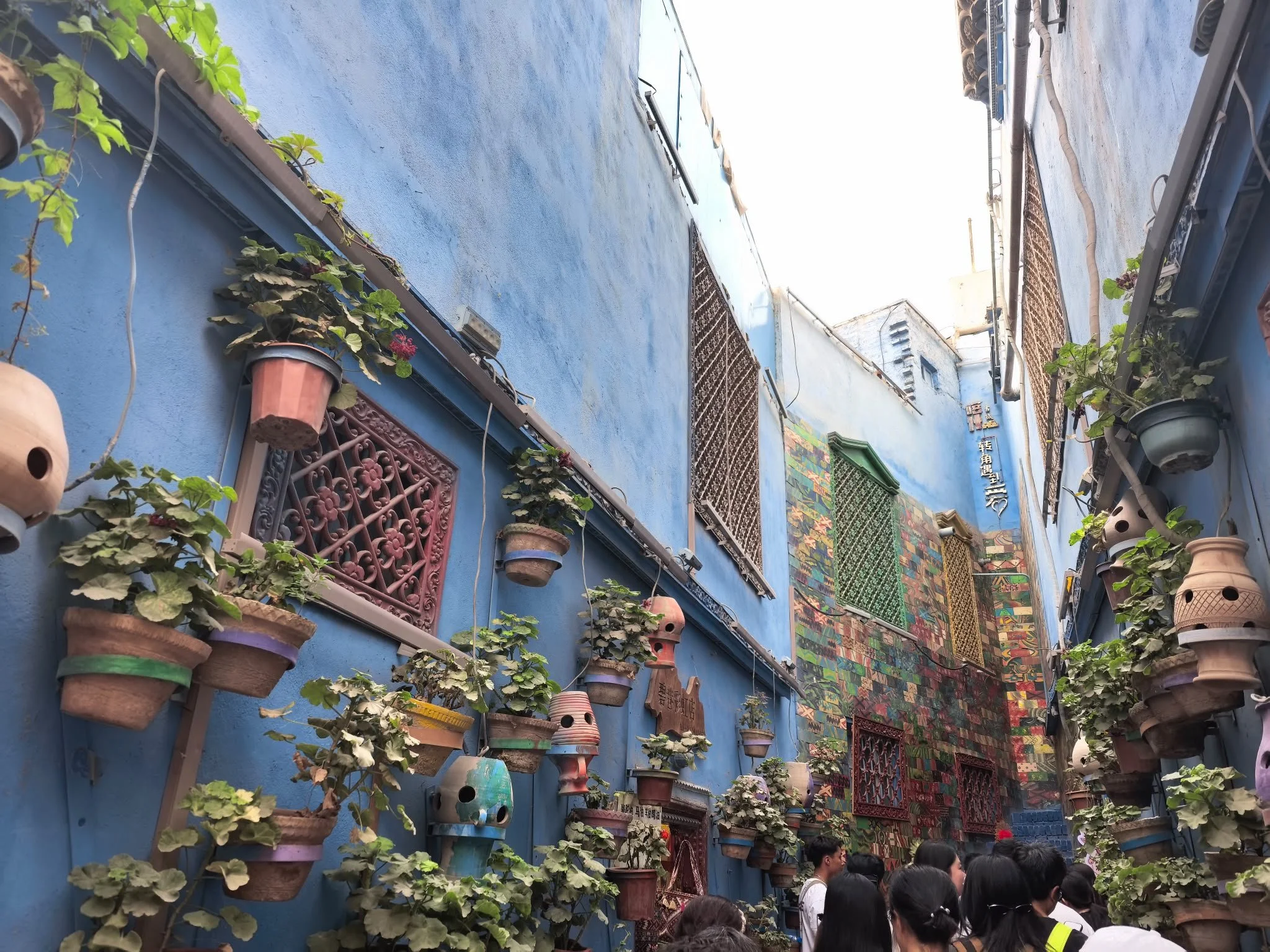
In Kashgar, I booked a hostel in the centre of the old town - the Han bazaar. Although I visited Kashgar when I was a teenager, I do not remember the old town streets near the Id Kah Mosque being so busy. There were also more street vendors, pulling wooden handcarts loaded with cuts of meat, fresh fruits and vegetables along the narrow streets.
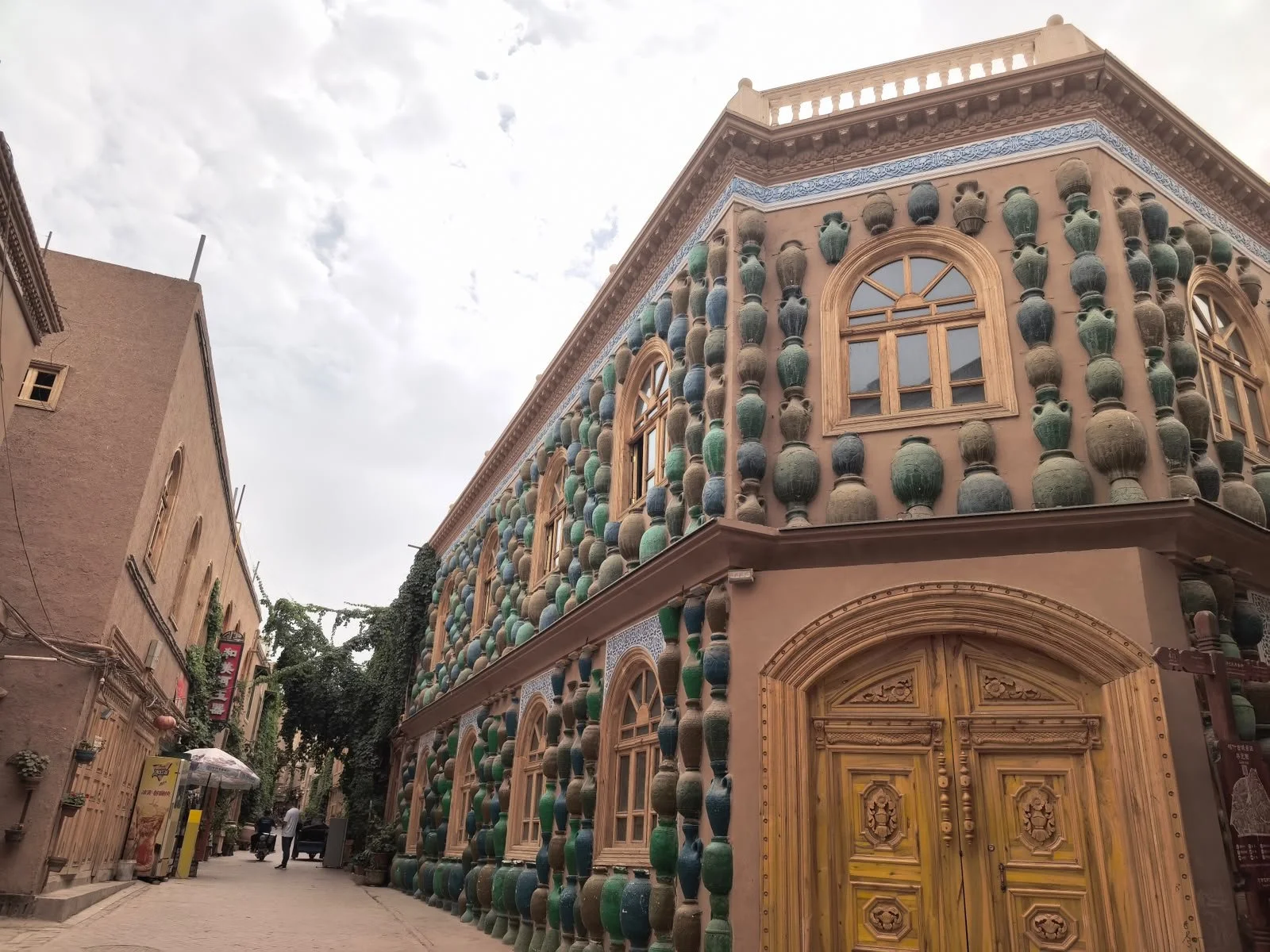
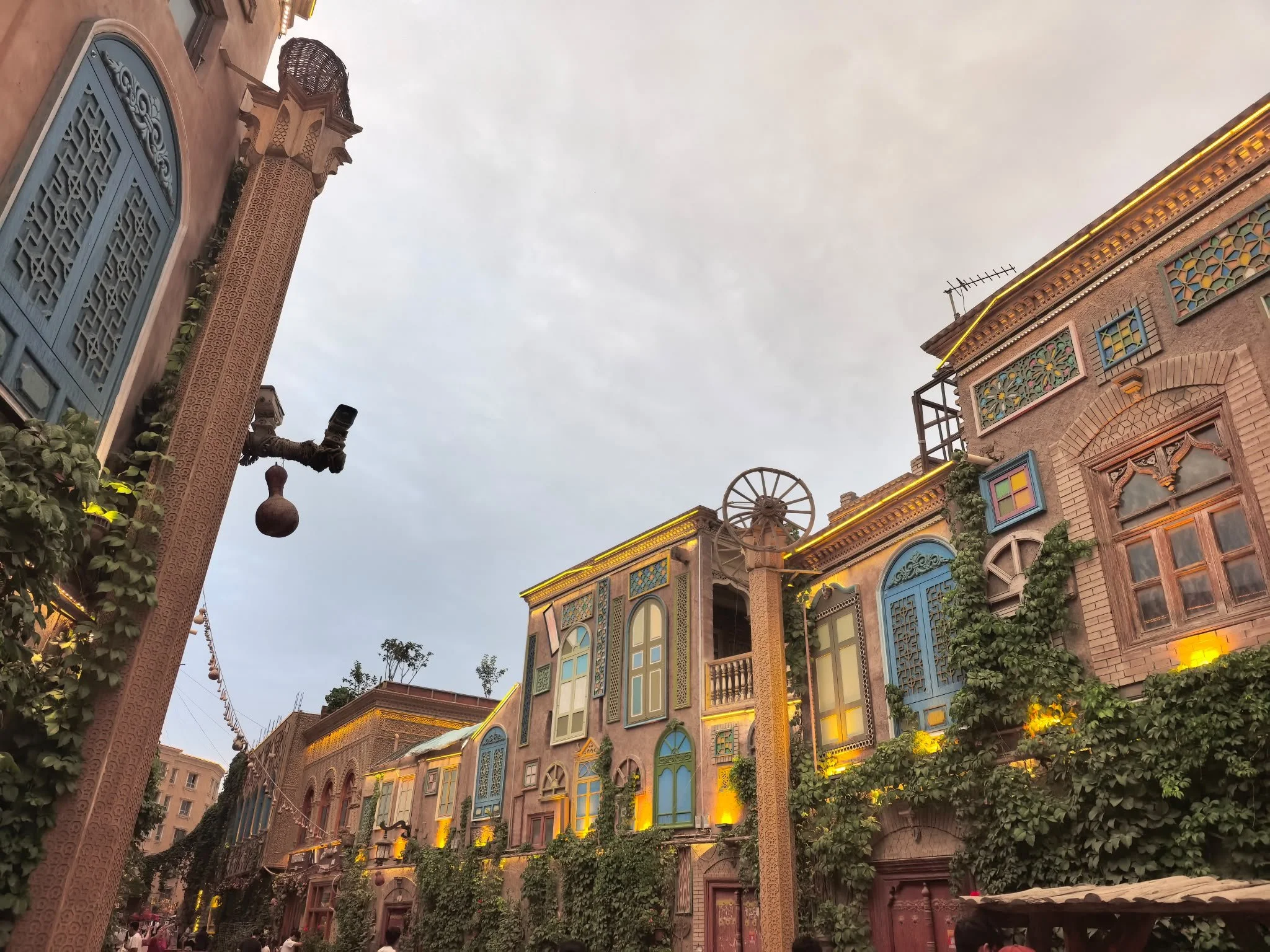
Now, it is a completely different scene. It is obviously much more touristy than before, streets were paved, there were shops everywhere with proper glass fronts, and also sightseeing shuttles were waiting to carry tourists in the open spaces.
In the old town area, the Han Bazaar is one of the main attractions, and I was very satisfied with my hostel being right inside of it.
In the evenings, when everyone has gone home to rest, the streets were quiet, only the occasional voices of late-night walkers echoing through streets that carry so much history. It was like magic.
The next morning, my journey officially began right on my doorstep.
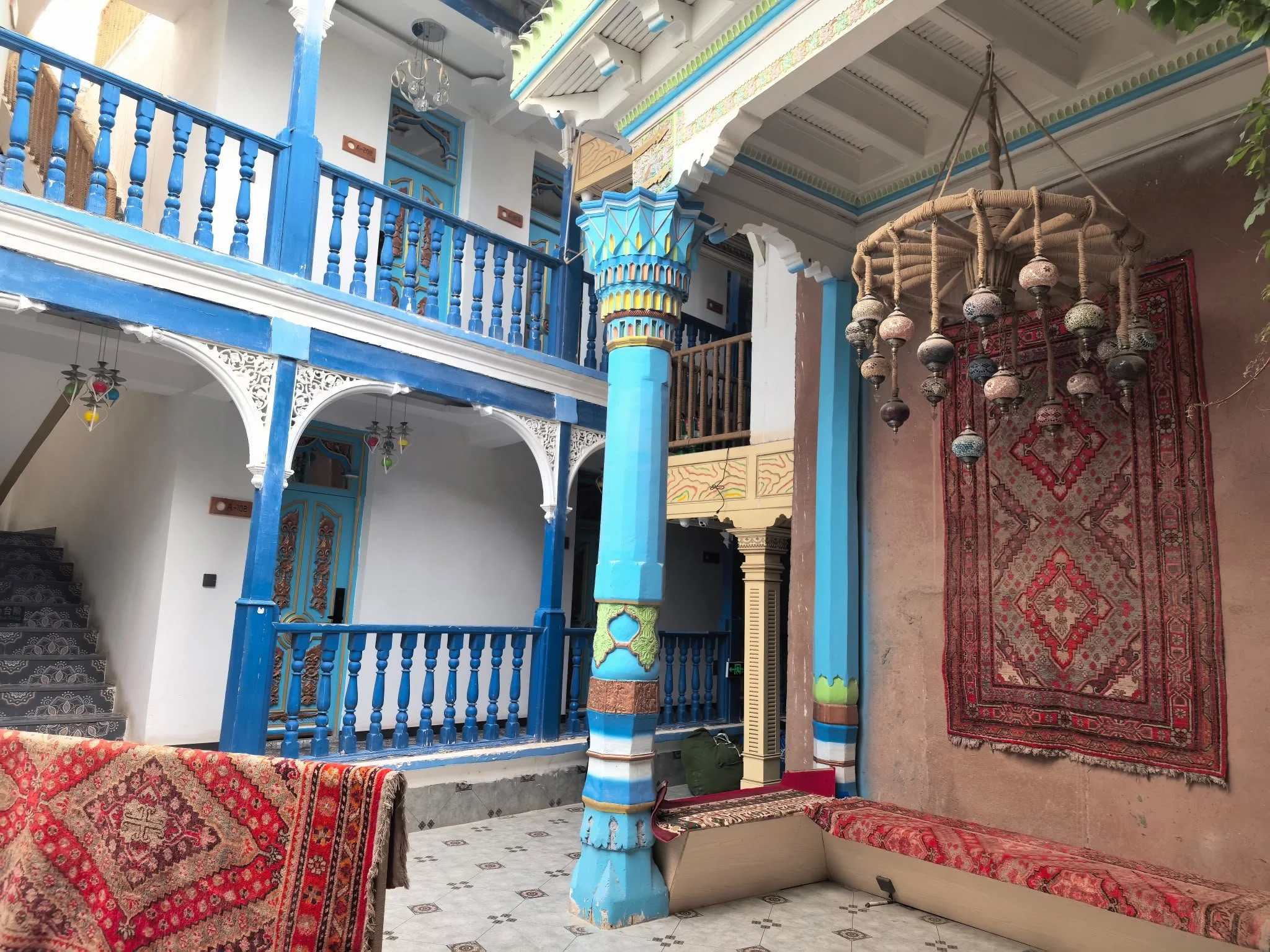
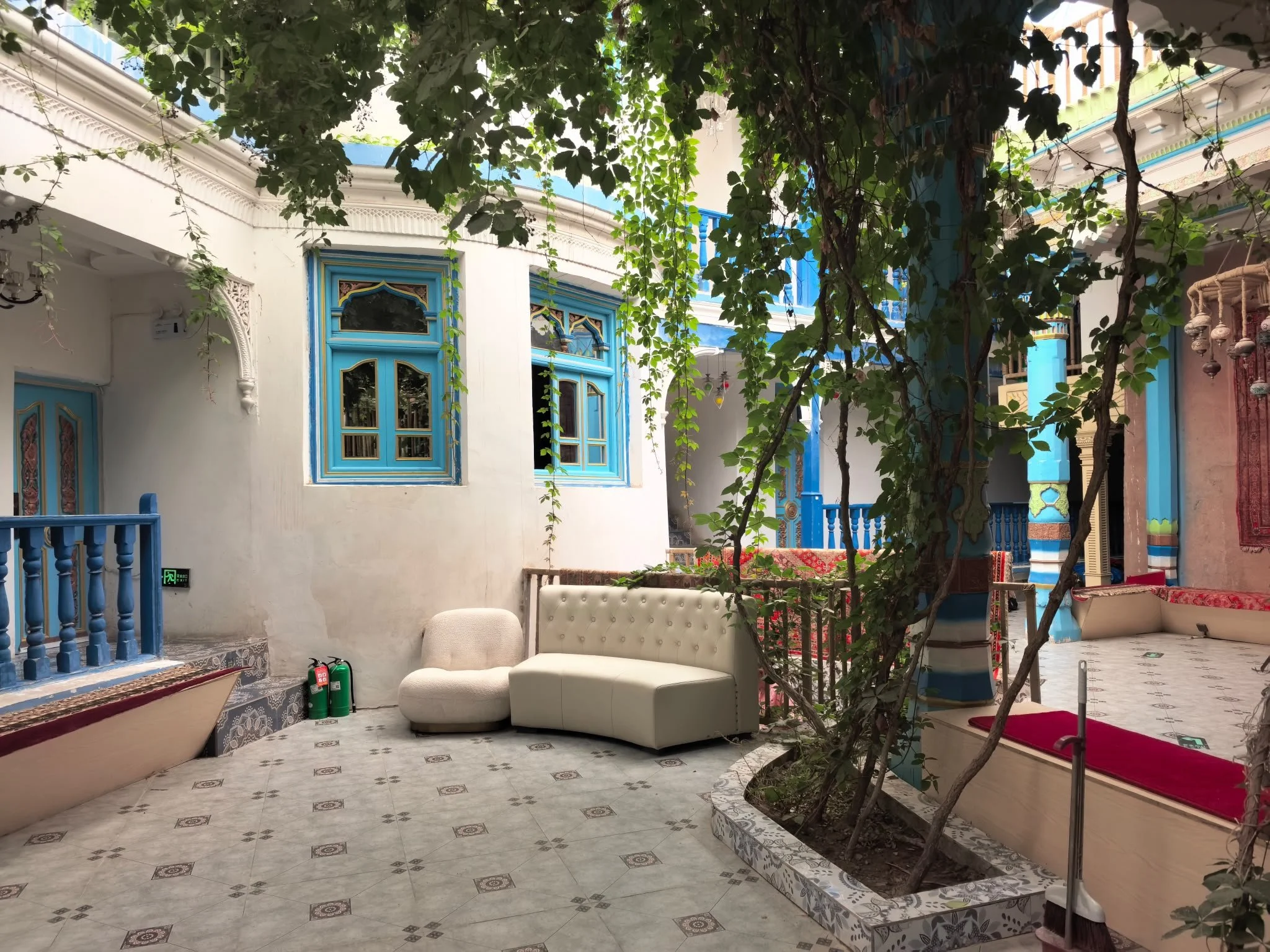
First of all, the hostel was already an impressive attraction in the bazaar. I could tell it had been someone’s house, close to a hundred years old. The beautiful courtyard was painted blue and decorated with Central Asian style lamps. There was also a mulberry tree growing in the centre of the courtyard, its ancient branches sprawling across the rooftop, weaving shade into the space below.
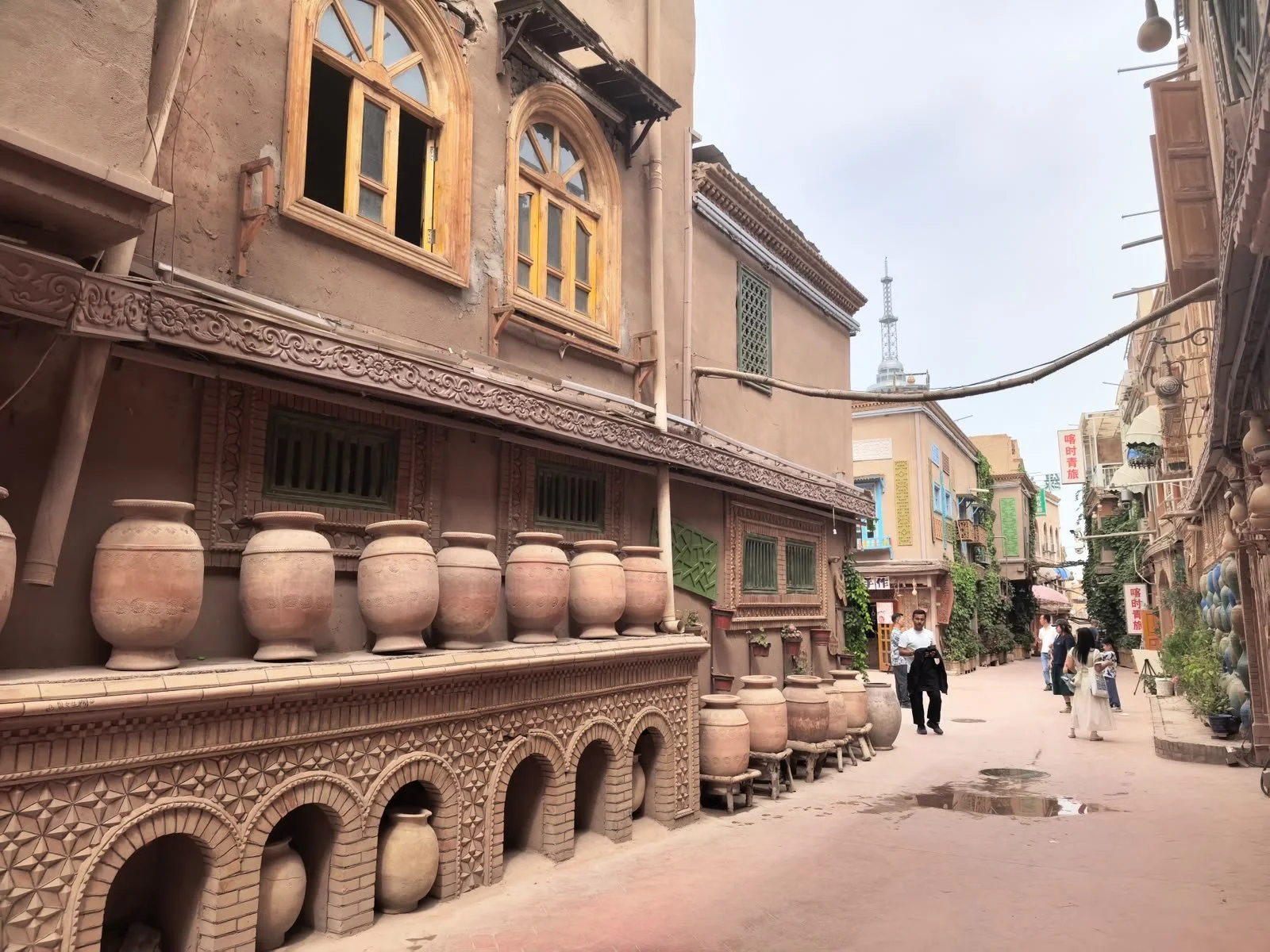
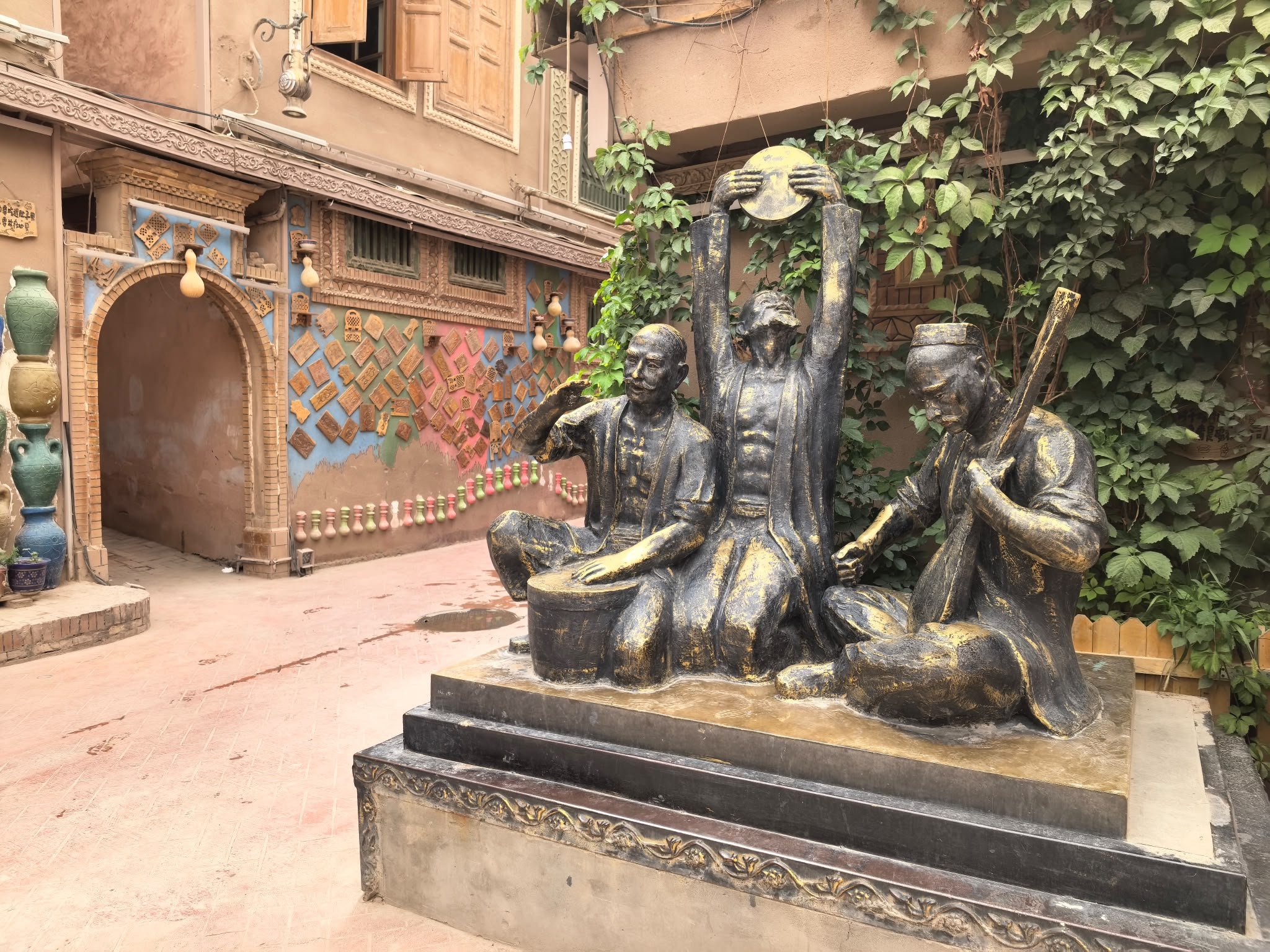
When I stepped outside the house, I was immediately in a fairytale-like world of an old bazaar. The only differences were that the souvenirs placed on the shelves were all made in factories of east China whereas in the real bazaar, they were mostly made locally or traded from different parts of the world.
Anyway, I kept on walking to appreciate this world that has been put together for us tourists to enjoy.
I heard the rhythmic sound of a tambour from a distance. Within a few steps, I arrived at a tea house in the corner of the street. The sound and the music couldn’t be more familiar to me, but I still decided to appreciate it among other tourists. The player was very skilled, playing every string not just quickly but accurately. The tea house was designed authentically, serving traditional tea while offering an enjoyable musical experience in the meantime.
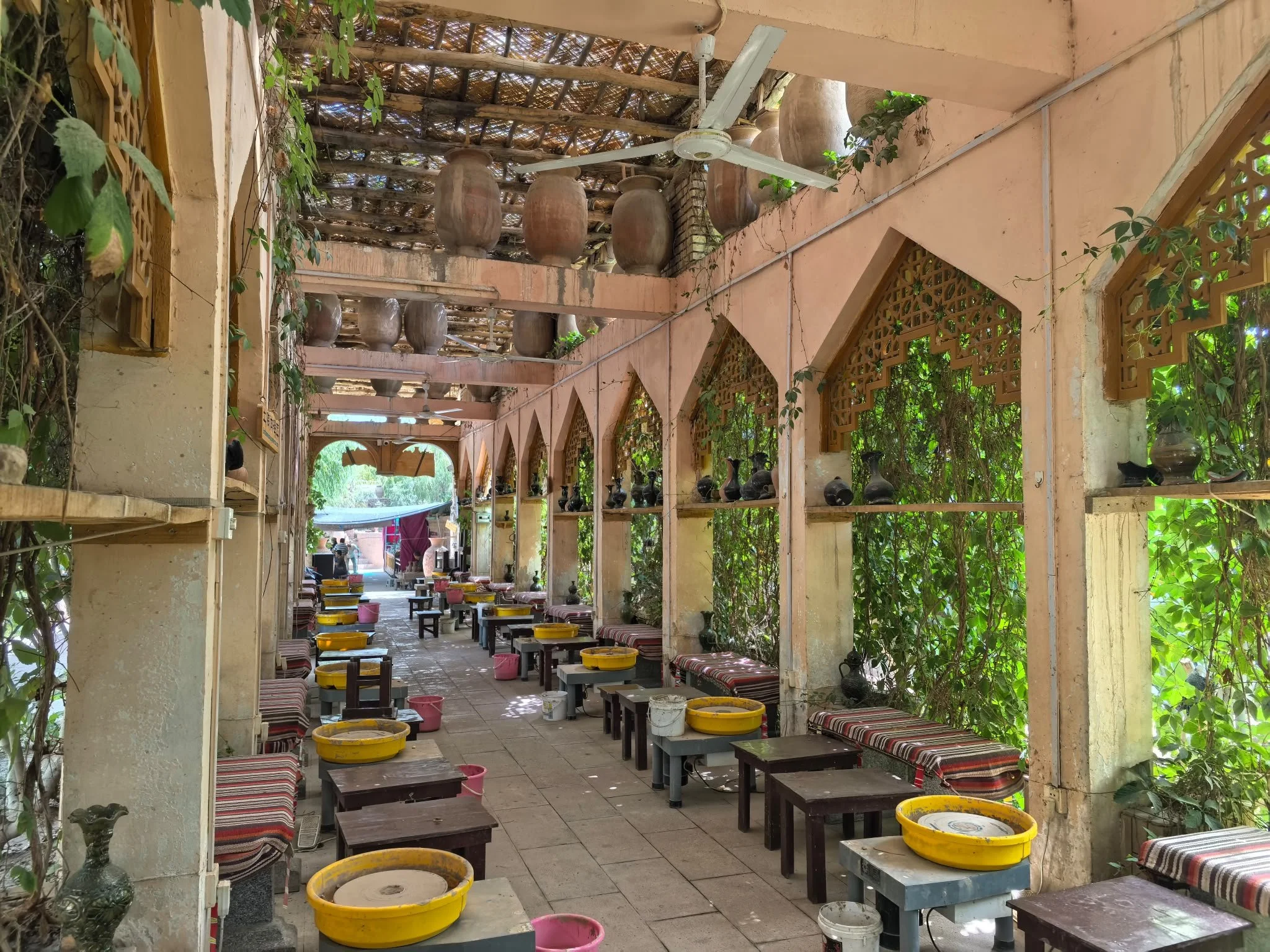
The streets of the bazaar were curved and led to many unexpected parts of the town. There were iron sections displaying beautiful locally made iron products, such as teapots, cooking pans, all kinds of decorative display items. What interested me the most were those shiny combs and mirrors, with delicately engraved flower designs, and also teapots no bigger than an espresso cup.
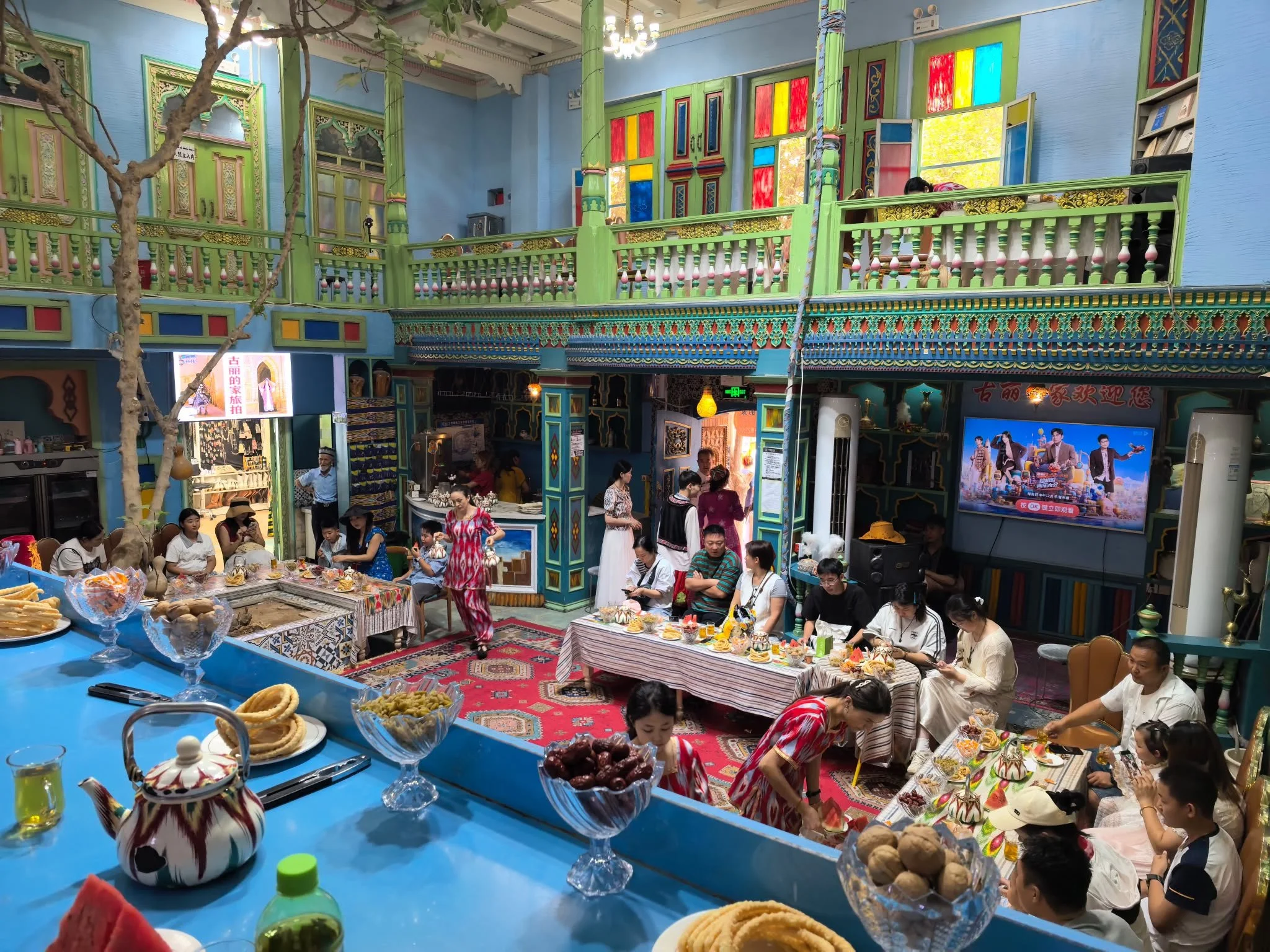
There were photography shops that had collections of beautiful traditional ethnic clothing. They were offered for tourists who wanted to have the most authentic experience in the bazaar - wearing the traditional clothing and tasting the most authentic food. I would imagine, nothing could be better than this.
/
The next day, I went to the other side of the old town, where the Id Kah Mosque stands on the edge of the square. The mosque was still the same as I remembered - the bright yellow facade under the blue sky and in contrast with the terracotta of the square - how could anyone forget this ancient image and the stories that could have happened here?
Here, I take a moment to mourn - the past, the history, the struggles of a fallen empire - one of the world’s great cultural and commercial centres, which sank together with the ancient Silk Road.
A thousand years is a long enough time for this giant to wake up and to see the sky again.
It is full of scars, old and new, carrying them all. However, it is still standing to show the world that it hasn’t given up!
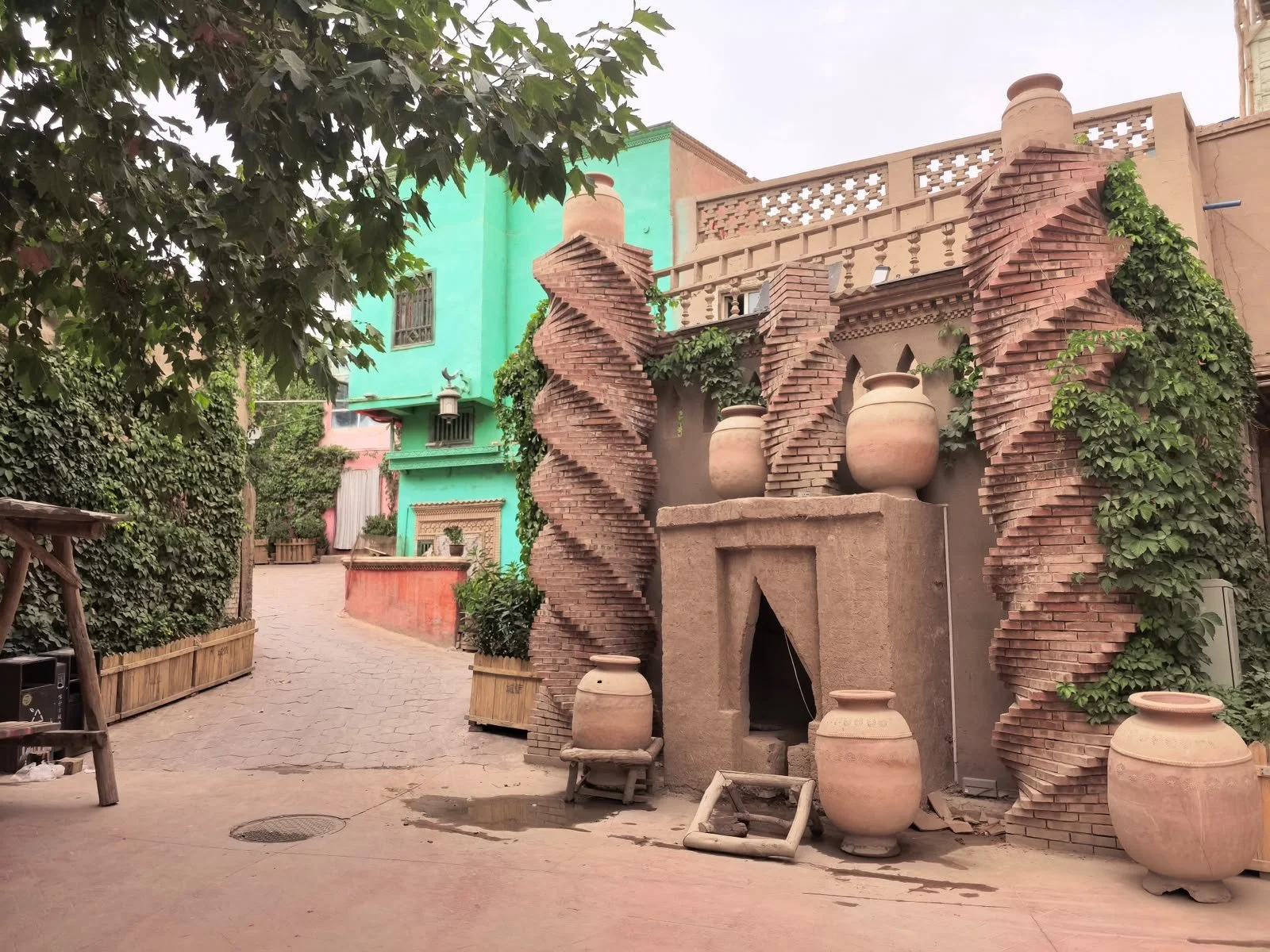
The winding streets behind the Id Kah Mosque added more mystery to the already mysterious area. The streets branched out in all directions, each taking a different shape - it seemed impossible to go through all of them.
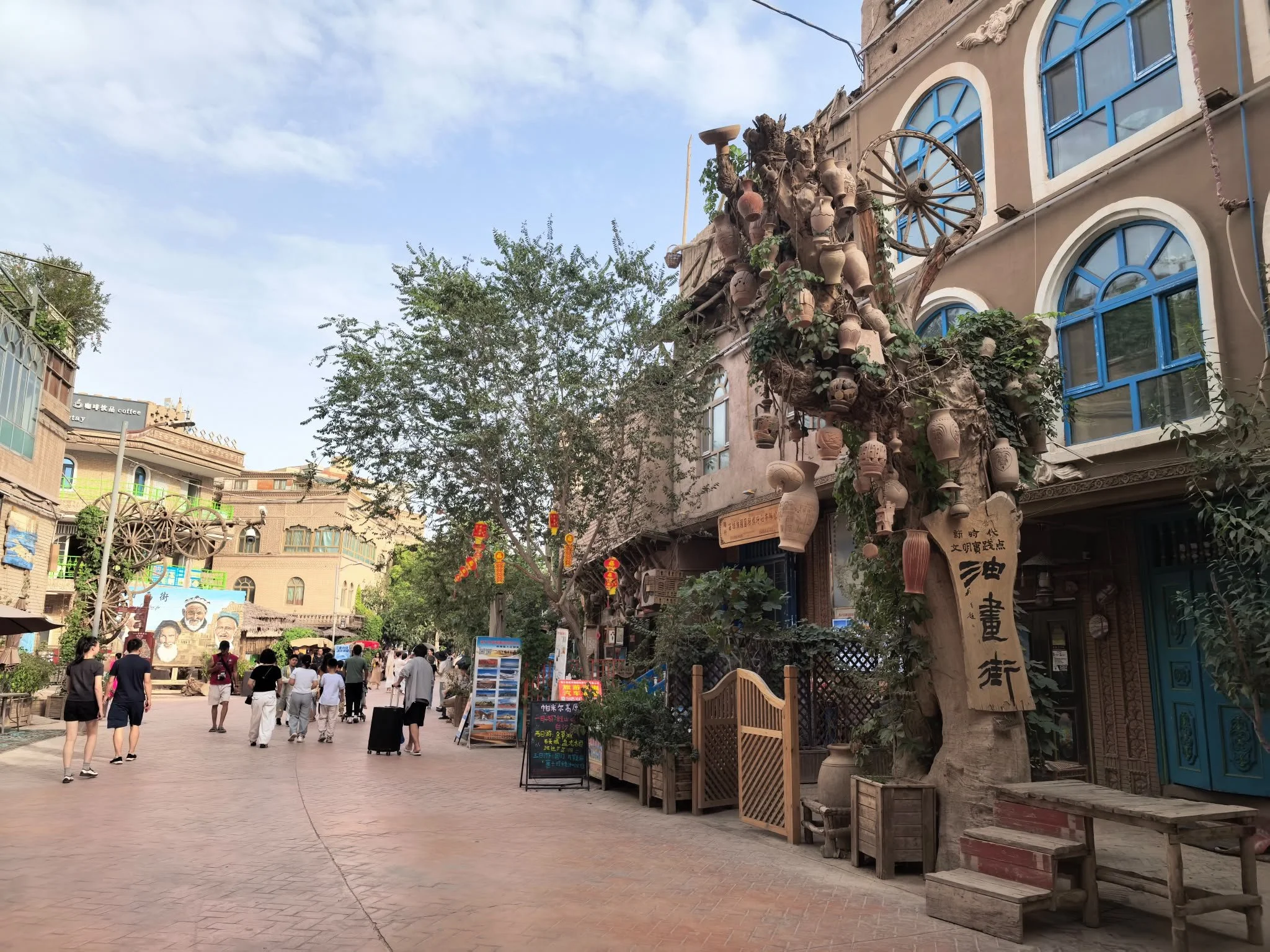
There was a particular street that drew my attention - the oil painting street. This was an artistic street that had gathered many locally famous painters and calligraphers. The well-designed shops and displayed paintings made me feel as though I were walking into a European town.
I knew an artist before coming, so I was especially eager to visit his studio and coffee house.
Rumi was the name of the place. I loved the name and those who know, will know. It carries multiple meanings in one word - different in the Chinese language and in Central Asian tradition.
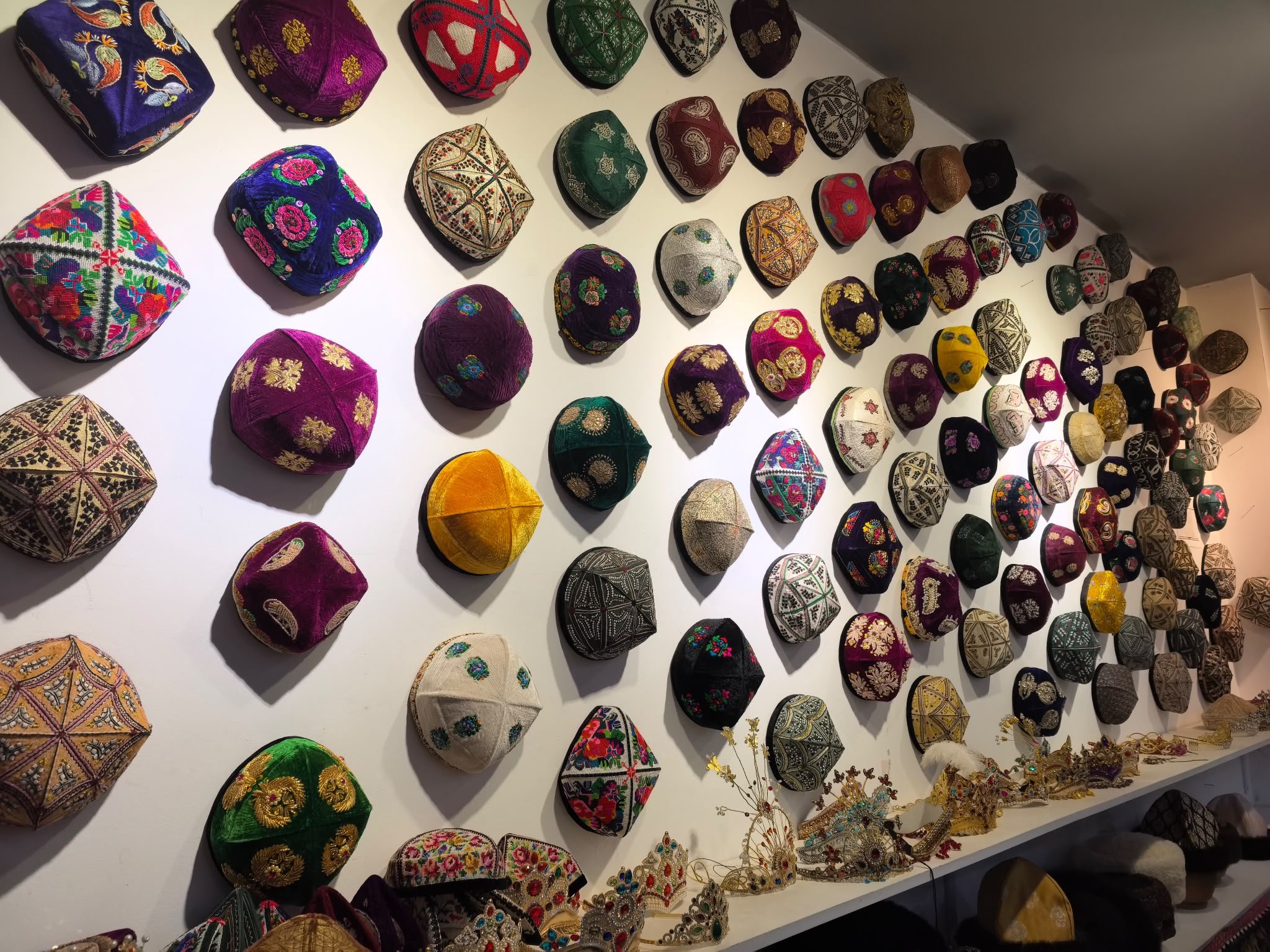
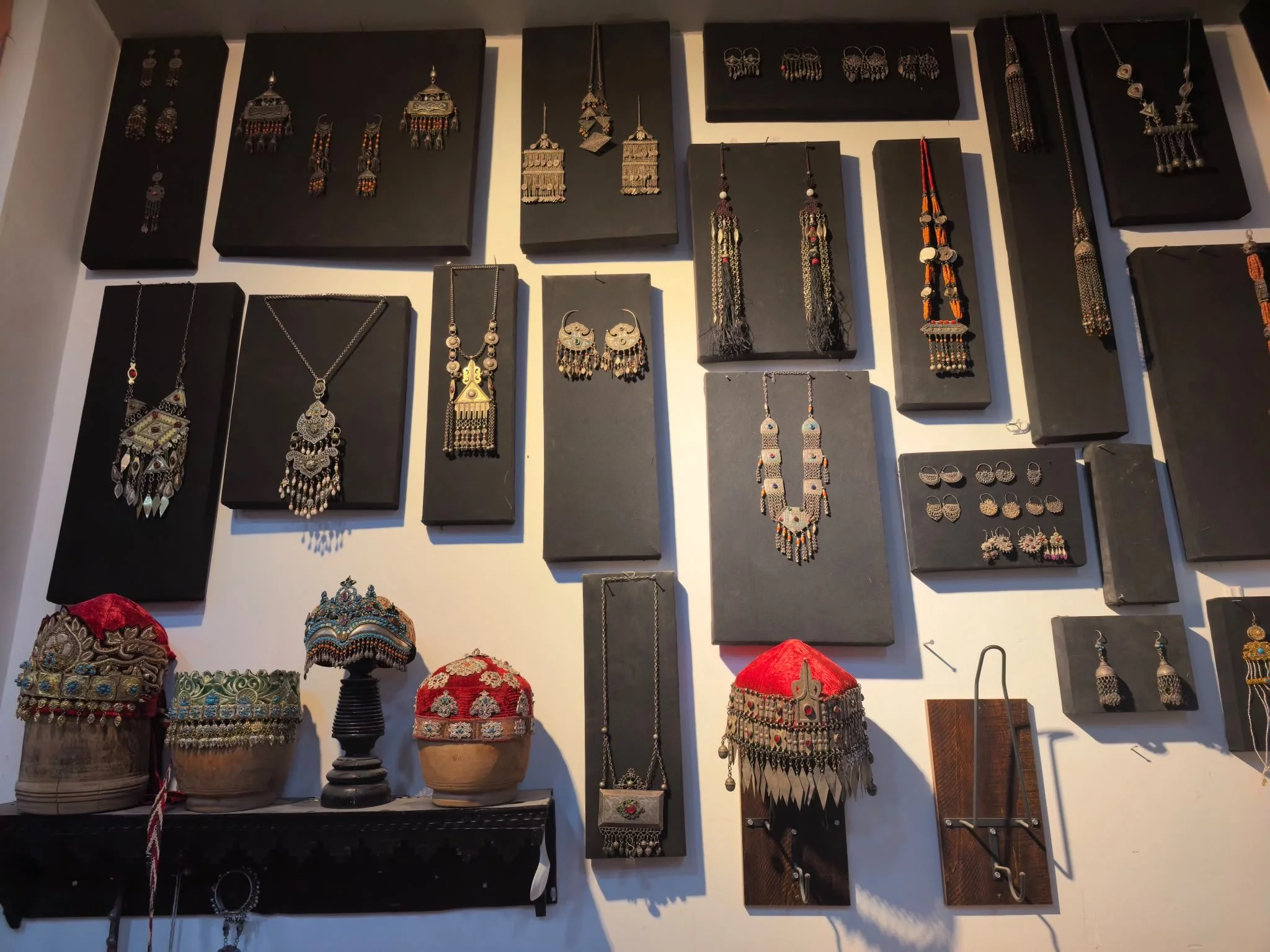
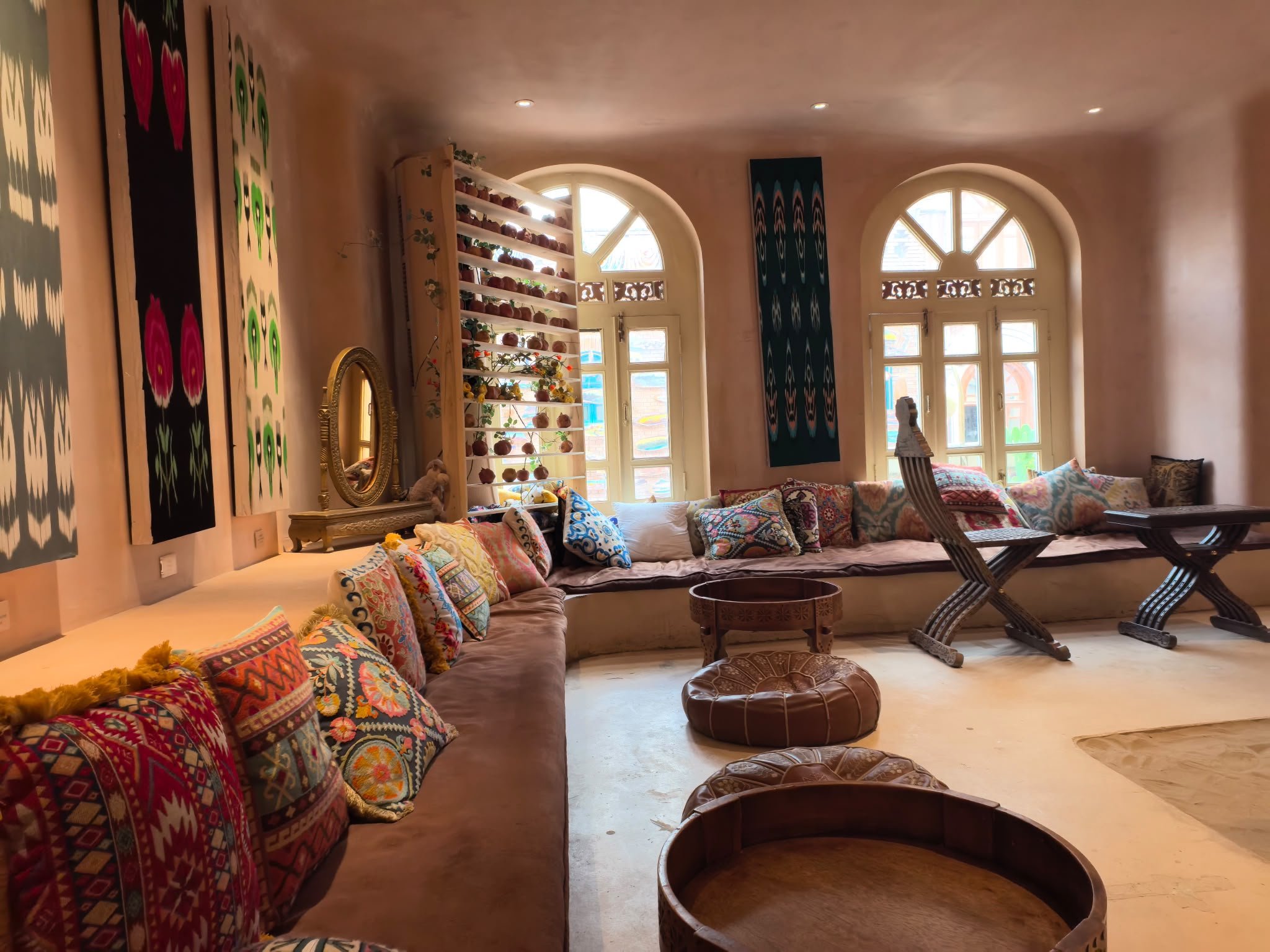
It was a small but lovely shop, carrying so much valuable historical knowledge of the local culture - the clothing, the accessories, the music - all unique to the region.
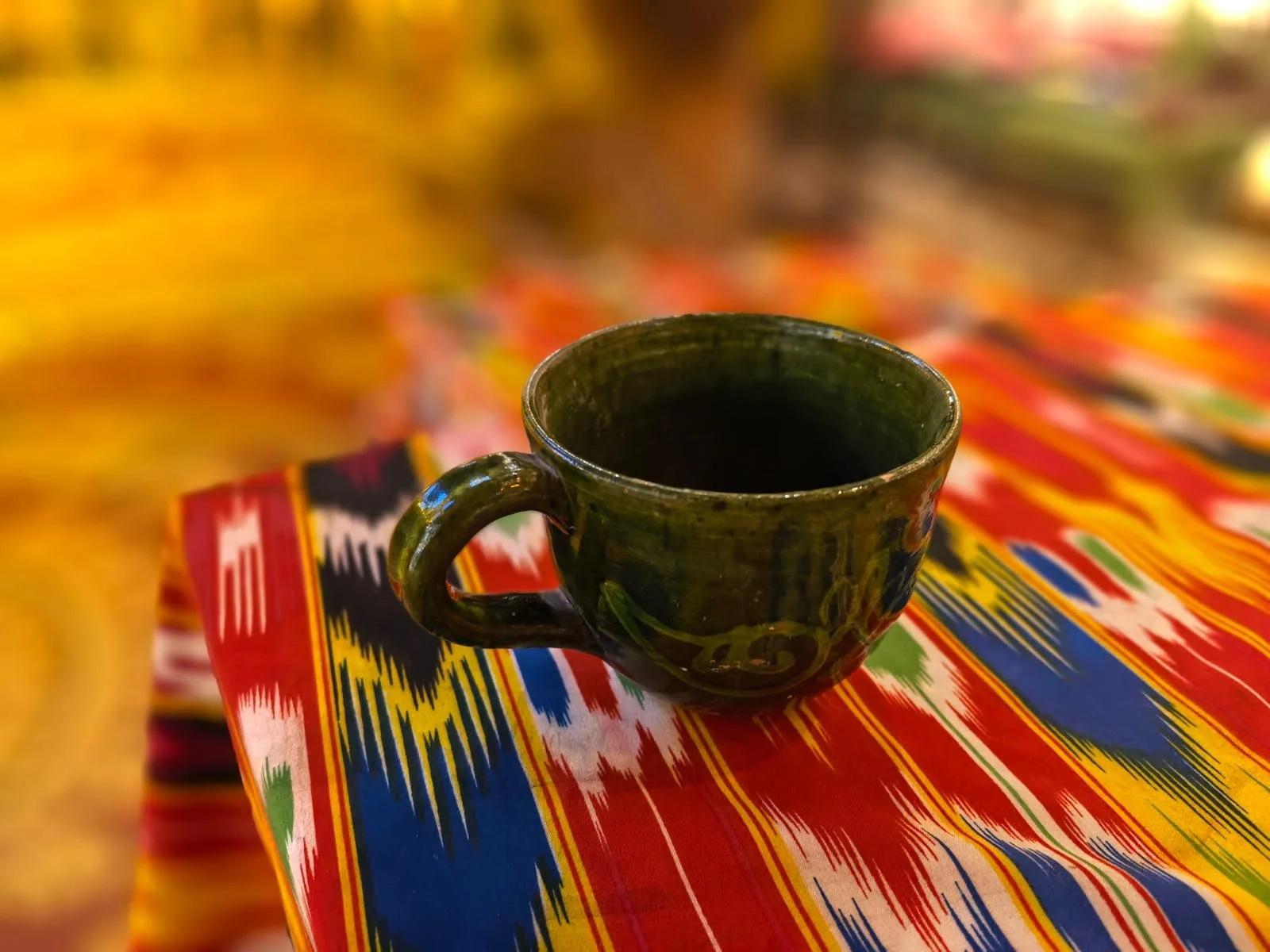
I ordered a designer coffee and experienced the shop’s concept as fully as I could, simply by being present in it.
My only regret was hesitating to stay for the evening show - a Muqam band performing live in the café. The reviews spoke of something magical. I didn't stay. I knew it was going to be too beautiful to sit through easily, and that leaving afterwards would be even harder. I was going back to France, after all.
/
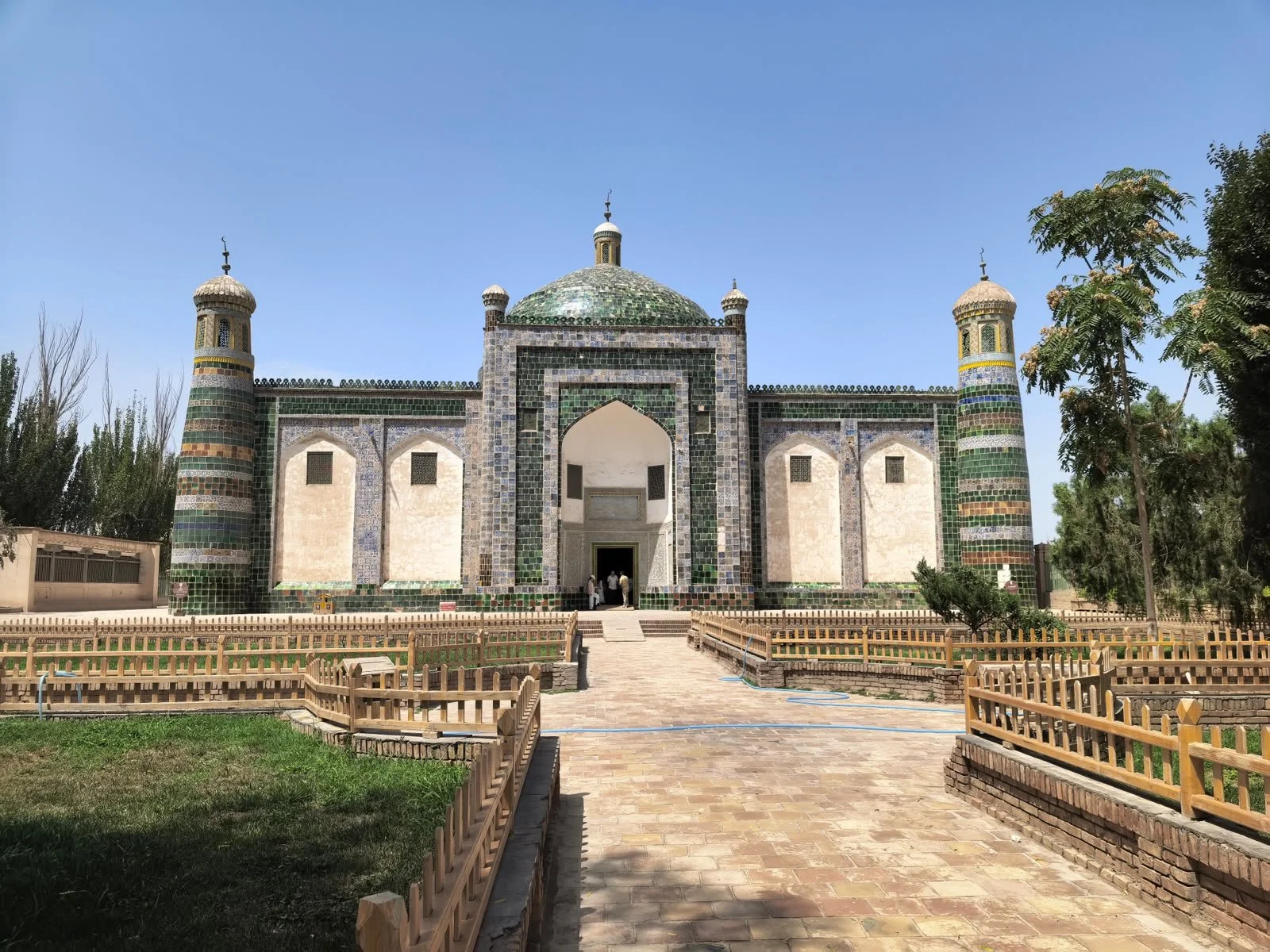
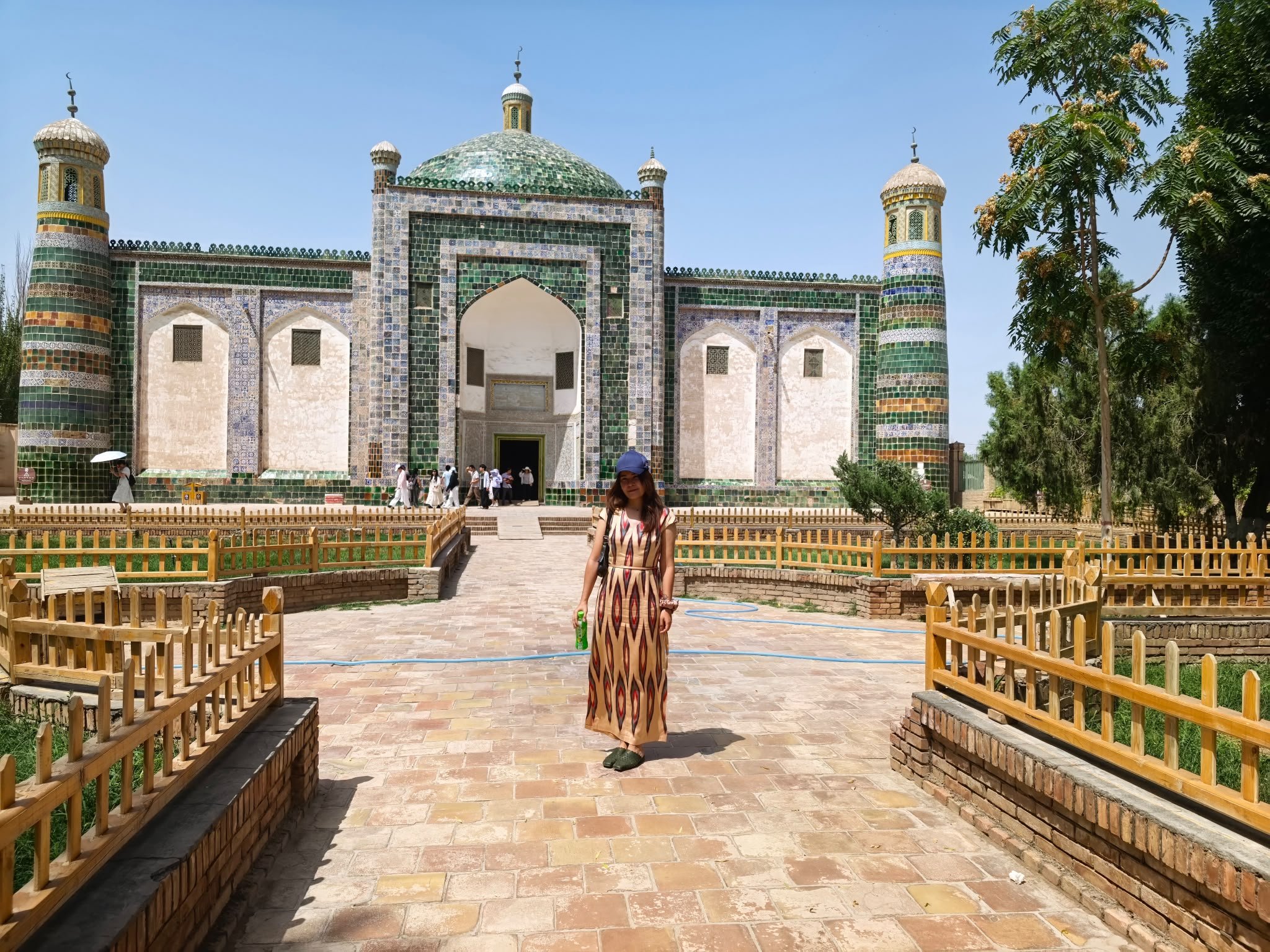
Next stop - the Apak Khoja Mausoleum, also known as the Iparhan Tomb.
On the day of visiting, I put on my newly made long dress with the traditional atlas pattern. I did not have a specific intention, but the act brought me closer to Iparhan herself, since we are both Uyghur women.
It is said that she was offered to Emperor Qianlong to preserve peace between two regions. She had a mysterious fragrance about her and it was a unique signature of hers. It captivated everyone, and Qianlong himself was so moved that he gave her the title of imperial consort.
She was the granddaughter of the local chieftain, Apak Khoja. She went to Beijing in her twenties, and died at 35, from depression.
I couldn’t help but reminisce about her experience, living far from home without having the closest ones to share the sorrows and pains of living among people who shared nothing of her background.
Somehow, this thought brought up my memory of living in France for eight years without having a chance to visit home. To some extent, I could see why she might have fallen into such depression and chose to give up on life - especially in a time when there was no technology to connect with family through the internet. The distance between Kashgar and Beijing must have felt farther away than the moon.
After her death, Qianlong showed his deep adoration by sending 120 bearers to bring back her belongings, signifying the great honour he had bestowed upon her, but she was buried near Beijing and was never able to return to her homeland.
What a fate, to be a woman in the old kingdoms, where they had no say over their fate but to conform to the will of fathers and kings.
The mausoleum sat within a large garden, constructed around the tomb building at its centre. The interior was dedicated to the Apak Khoja family.
The entire garden was quiet and it felt as though it was still commemorating the tragic fate of this family.
We all think that history is something long gone, but I still sensed something in the air. Something has been carried through centuries to reach the eyes and ears of people of today.
/
The Kashgar trip was something I had been dreaming of taking when I was in France. It had seemed impossible when the restrictions were so strict, especially in the years before.
Now, I felt a deep sense of relief in having finally achieved this wish.
2026
Paris